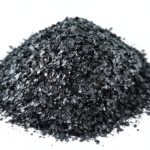

When a crop stalls — after cold, after transplanting, after a herbicide setback — nitrogen from the soil takes days to show up in the leaf. Free amino acids take hours, because they do not need to be reduced before the plant can use them. That is the whole commercial case for an 80% amino acid powder.
What 80% actually means
The figure refers to the total free amino acid content of the powder, usually produced by enzymatic hydrolysis of soy or feather protein. Enzymatic hydrolysis preserves the L-form of the amino acids, which is the form plants and animals can assimilate. Acid hydrolysis is cheaper but converts part of the content to the D-form and destroys tryptophan.
Ask for the amino acid profile, not only the headline percentage. A product rich in glycine and proline behaves differently from one rich in glutamic acid, and a genuine enzymatic product will state L-form content.
Dilution and timing
| Crop situation | Dilution | Rate per hectare | Timing |
|---|---|---|---|
| Vegetables, general | 1:800–1:1000 | 0.75–1.5 kg | Every 10–14 days |
| Fruit trees | 1:1000–1:1200 | 1.5–2.5 kg | Bud break, fruit set, sizing |
| Stress recovery | 1:600–1:800 | 1.5–2 kg | Within 48 hours of the event |
| Greenhouse / fertigation | 1:1000 | 2–3 kg | Weekly during active growth |
Spray early morning or late afternoon. The leaf surface stays wet longer, and amino acids are taken up through the stomata and the cuticle while the solution is liquid.
Compatibility
- Compatible with most foliar fertilisers, including calcium and micronutrient chelates.
- Do not mix with strongly alkaline products (pH above 9) or with copper-based fungicides in the same tank.
- In hard water, add the amino acid last and keep the final pH between 5.5 and 7.
Four mistakes that waste the product
- Spraying at midday. The droplet dries before absorption and the UV load degrades part of the free amino acid fraction.
- Over-diluting. Below about 1:1500 the uptake is too small to change anything measurable.
- Using it as a nitrogen replacement. At 1 kg/ha the nitrogen delivered is around 160 g — this is a signal product, not a fertiliser.
- Ignoring the profile. Buying on percentage alone gets you a powder that may be mostly glycine with little of the amino acids that drive stress recovery.
Our 80% amino acid powder is enzymatically hydrolysed, fully water soluble, and available in 20 kg bags; the amino humic granule combines the same amino fraction with humate for soil application. Ask for the technical data sheet.
Send us your crop, soil and target specification — we will reply within 24 hours.